Best Budget ANC Wireless Earbuds: What Specs Actually Matter
Active noise cancellation used to cost $300. Now it is everywhere under $60. Here is how to tell true noise cancelling from cheap marketing tricks.

Prince Anichi · Updated
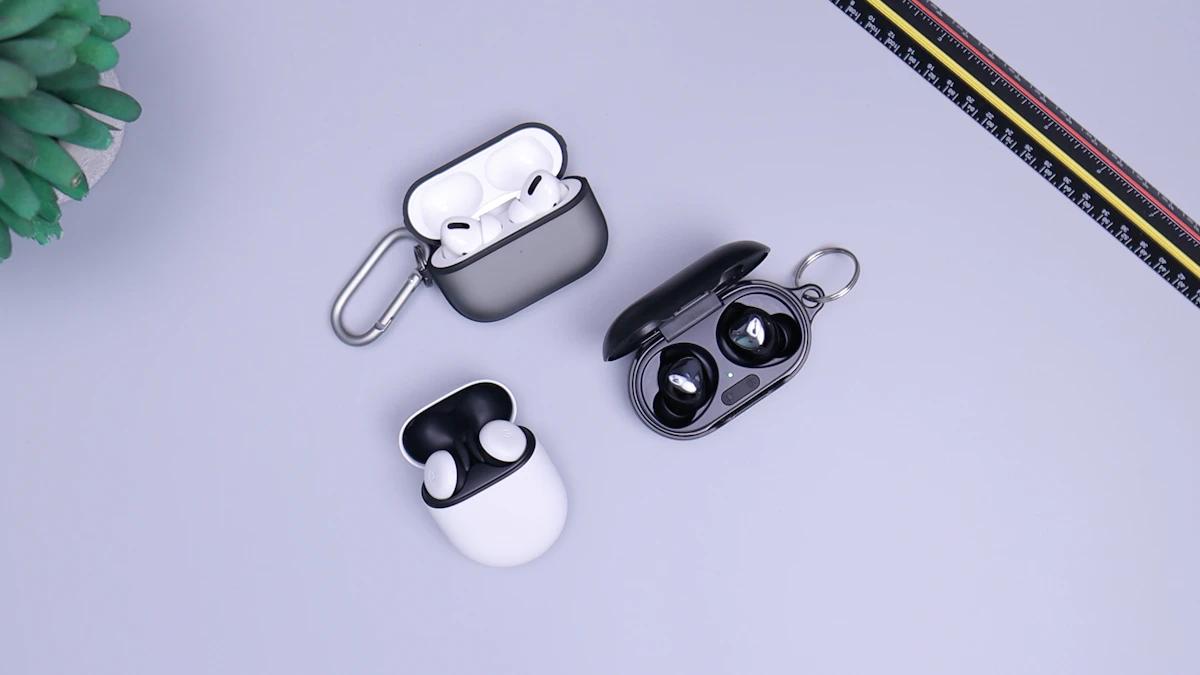
Active Noise Cancellation (ANC) was once a luxury reserved for premium over-ear headphones and flagship earbuds priced north of $250. Today, you can browse online marketplaces and find dozens of wireless earbuds advertising "45dB Hybrid ANC" for under $50.
However, real-world noise cancellation is far more complex than a decibel number printed on a box. Cheap earbuds often cut corners on microphone arrays, digital signal processing (DSP) chipsets, and acoustic seal design, leaving you with hollow noise reduction and degraded music playback.
Whether you need to mute noisy bus commutes, block out office chatter, or enjoy podcasts while traveling, this guide explains what hardware specifications genuinely dictate audio performance.
How True ANC Works: The Three Architectures
Active noise cancellation uses miniature microphones to capture ambient acoustic waves, processes the wave through an internal DSP, and generates an inverted "anti-phase" sound wave through the speaker driver to cancel out the incoming noise.
Not all ANC systems are built the same way:
Feedforward ANC: Mic on exterior only ---> Fast at cancelling predictable droning, struggles with sudden sounds.
Feedbackward ANC: Mic inside ear canal only ---> Accurate at ear drum, but can mistakenly cancel out bass frequencies.
Hybrid ANC: Both Exterior + Interior Mics ---> Best noise cancellation across wide frequencies, lowest distortion.
- Feedforward ANC (Budget Common): Uses an exterior microphone on the earbud casing. It is cheap to produce and handles low-frequency drone (airplane engine rumble), but struggles with wind turbulence and sharp treble sounds.
- Hybrid ANC (Recommended): Pairs both an external feedforward microphone and an internal feedback microphone sitting inside the acoustic nozzle. The internal mic listens to what your ear actually hears and corrects errors in real time. Always look for the word "Hybrid" on the spec sheet.
Don't Confuse ANC with ENC
One of the most widespread marketing deceptions in affordable earbuds is the confusion between ANC (Active Noise Cancellation) and ENC (Environmental Noise Cancellation).
- ANC is for YOU: It silences external noise so your music, podcasts, or silence stay undisturbed.
- ENC is for the OTHER PERSON: It uses dual microphones during phone calls to filter out wind or street noise so your voice sounds clearer to the person on the other end.
Many cheap listings loudly claim "Noise Cancelling Wireless Earbuds" in their product title, only for buyers to discover in small print that it only features basic call-microphone ENC, with zero active cancellation for listening.

Bluetooth Codecs: SBC, AAC, and LDAC Explained
A Bluetooth audio codec determines how digital sound is compressed and beamed from your smartphone to your earbuds. The best acoustic drivers in the world will sound flat if your wireless link bottlenecks the audio bitrate.
- SBC (Subband Codec): The baseline universal standard. Maxes out around 328 kbps. Every Bluetooth device supports it, but high frequencies can sound harsh and compressed.
- AAC (Advanced Audio Coding): Standard on Apple devices and widely supported on Android. Operates at roughly 256 kbps with superior compression efficiency, delivering clean, reliable listening.
- LDAC (Sony High-Res): Streams at up to 990 kbps, delivering three times the data throughput of standard codecs. While once confined to flagship Sony headphones, high-value chips from companies like Realtek and BES now bring LDAC into sub-$70 earbuds.
The Reality Check: Enabling high-bitrate codecs like LDAC noticeably increases battery drain and reduces Bluetooth connection range through walls. For daily commuting and podcast listening, solid AAC or aptX implementation provides ideal stability.
The Acoustic Seal: Why Eartips Trump Active Electronics
No digital noise cancelling algorithm can compensate for a poor physical seal. This is known as Passive Noise Isolation.
If the silicone or foam eartip does not fit snugly inside your ear canal, ambient sound simply leaks past the driver. Even worse, the loss of an airtight seal destroys low-end bass response, making music sound tinny.
- Always test all three included sizes of silicone tips (S, M, L). Most people actually have different canal sizes in their left and right ears.
- Consider upgrading to aftermarket memory foam eartips. Foam expands to fill the ear canal contour, naturally blocking an additional 5dB to 10dB of high-frequency noise before the electronic ANC even kicks in.
Battery Life: ANC On vs. ANC Off
Running high-frequency microphone sampling and real-world audio inversion algorithms requires significant processing power.
Standard Playback (ANC Off):  7 to 9 Hours Continuous Playback
Active Cancellation (ANC On): 4.5 to 6 Hours Continuous Playback
High-Res LDAC + ANC On:       3.5 to 4.5 Hours Continuous Playback
When evaluating battery specifications, always verify whether the manufacturer's advertised runtime is measured with ANC turned ON or OFF. A pair promising "30 hours total battery" usually means 6 hours per charge in the earbuds plus four recharges from the battery case with noise cancellation disabled.
Quick Buyer's Checklist for Budget ANC Earbuds
| Feature | What to Look For | What to Avoid |
|---|---|---|
| Noise Cancellation | Hybrid ANC (Internal + External Mics) | Vague "ENC" or "Noise Reduction" callouts |
| Transparency Mode | Adjustable Ambient / Passthrough Mode | Single-mode non-adjustable ANC |
| Driver Size | 10mm to 12.4mm Dynamic Drivers | Unspecified miniature drivers under 8mm |
| Connectivity | Bluetooth 5.3 or 5.4 with Multipoint Pairing | Outdated Bluetooth 5.0 or 5.1 chips |
| Water Resistance | IPX4 or IPX5 rating (sweat and splash proof) | No official IP rating |
| Companion App | Customizable EQ profiles and button mapping | No firmware update or EQ companion support |
Frequently Asked Questions (FAQ)
Can budget ANC earbuds completely silence human voices?
No. Active noise cancellation is chemically and physically most effective against repetitive, low-frequency sounds (engine rumbles, air conditioners, train hums). Sudden, irregular mid-to-high frequency sounds like human speech rely mostly on the physical seal of your eartip rather than the electronic ANC algorithm.
What is Multipoint pairing and do I need it?
Bluetooth Multipoint allows your earbuds to connect simultaneously to two devices (such as your laptop and smartphone). If you are watching a video on your computer and an incoming call arrives on your phone, the earbuds switch seamlessly without requiring manual re-pairing.
Does using ANC cause ear pressure or headaches?
Some users experience an artificial sensation of air pressure (often called "eardrum suck") when activating strong ANC. This is caused by the brain misinterpreting the sudden absence of low-frequency ambient rumble. Earbuds with companion apps allow you to dial down ANC intensity to eliminate this sensation.
The Bottom Line
You no longer need to spend $250 to get dependable noise cancellation and engaging sound quality. Look for earbuds featuring true Hybrid ANC, verified Bluetooth 5.3 Multipoint support, and a companion app with custom EQ. Pair them with properly fitted eartips, and you will get 85% of the flagship experience at a fraction of the cost.